Three wires and a config flag
The Palladium refresh Model S and X launched in the middle of the Covid supply chain mess, and Tesla “simplified” a bunch of things to keep the line moving. The Global headlight, the ambient lighting, the taillight design, and the motorized tilt screen all got cut or changed. Later build years put most of it back. So there are a lot of 2021 and early 2022 cars driving around missing features their own platform already supports.
The Matrix headlight is the one people ask me about most, and it’s the one I’d do first. The light output isn’t close.
(Disclaimer: I used to make the aftermarket adapters for this. I don’t anymore, so there’s nothing here for me to sell you. The engineering is the same either way.)
What changed in Feb 22
Matrix lights came to the Model S in the 2022.5 refresh and the Model X in the 2023.5. Both got a different front harness. The connector went to 3 pin where the earlier cars have a 14 or 6 pin, and in most cases that’s the only change in the entire harness.
Three pins is all a Matrix light uses. Pin 1 Power, pin 2 LIN, pin 3 Ground. No high beam, no low beam, no turn signal, no DRL. Tesla pushed the blinker across the LIN bus when they made the switch, so the analog blinker circuit goes away on these cars. Everything the light does now arrives as a command over LIN.
On the 2021 car the headlight connector is X261 on the left and X262 on the right, and only four cavities are populated: pin 1 LIN, pin 4 the blue turn signal, pin 6 Power, pin 9 Ground. Pull SOP14 for the 2021 schematic and SOP15 for the 2022 one and you can see the whole change in a single page. Pin 4 is labeled TURN_SIGNAL_SYNC, and it’s the one that has nowhere to go on a Matrix light.
The Model X is the easy one. Same light-side connector, and the wires run straight through without changing position, so it’s a housing swap and nothing else.
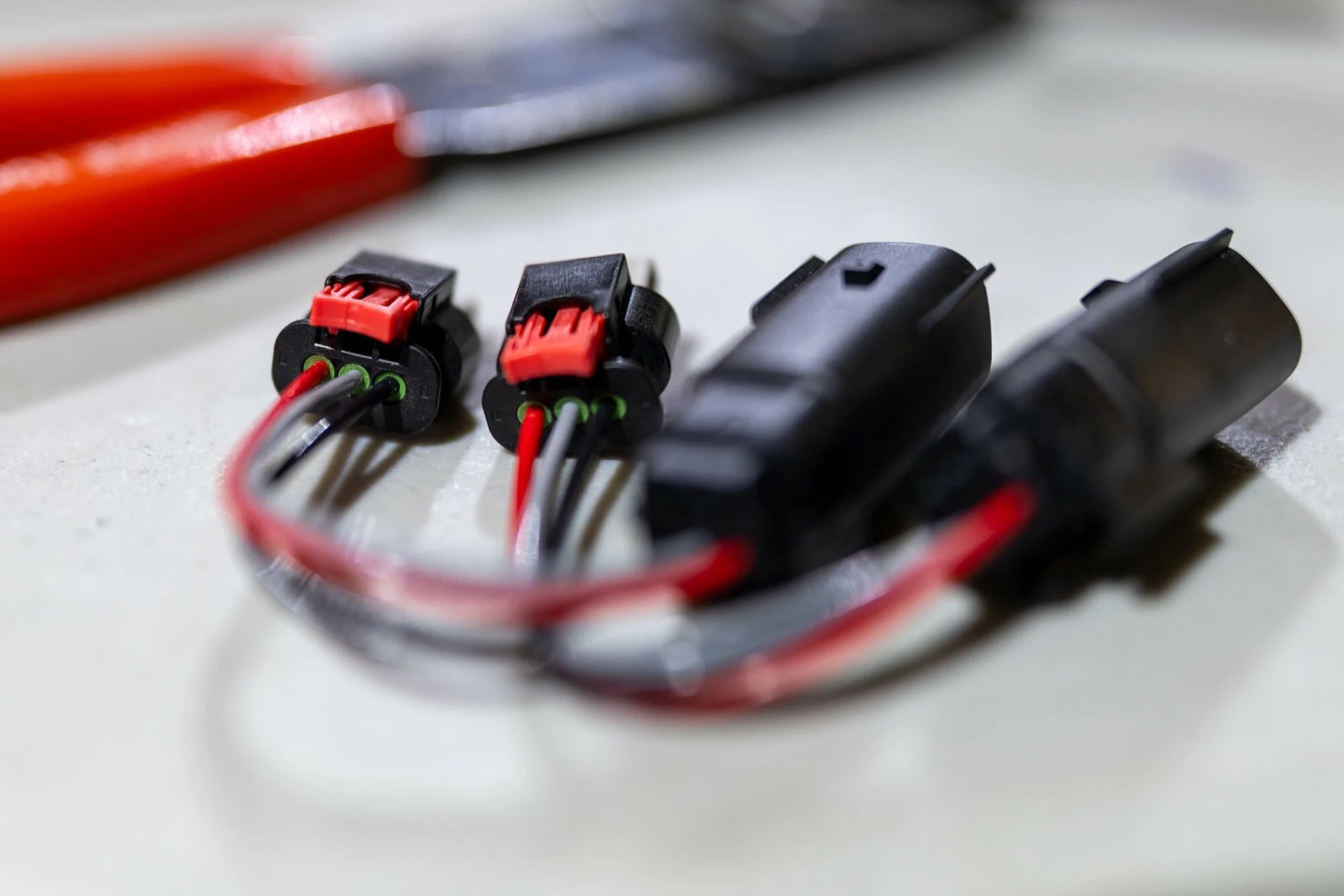 Small end to the light, big end to the car.
The lights are also physically different. The “Premium LED” units have a vertical mounting hole in the inner corner. The Matrix lights have a horizontal mount point in the same spot, and the plastic inner front frame on the refresh cars takes both on the same bolt. Matrix housings are a little smaller and carry a bumper retention clip on the bottom. On the old lights that’s a separate bolt-on piece you pull off with the light.
Why the 3 and Y don’t need any of this
Matrix conversions on the Model 3 and Y are plug and play with a config change, and Tesla supports it officially there because the old headlights aren’t made anymore. No adapter, no harness work.
Tesla’s stated position on the S and X is that the retrofit isn’t possible, and the reason they give is the connector difference. That’s the whole gap. Same bus, same three circuits, different plug.
You can tap the factory harness instead of using an adapter. I don’t recommend it on a car under warranty.
Voltage, and the flag that sets it
The “Premium” lights run 12v. The Matrix lights run 16v, stamped right on the housing.
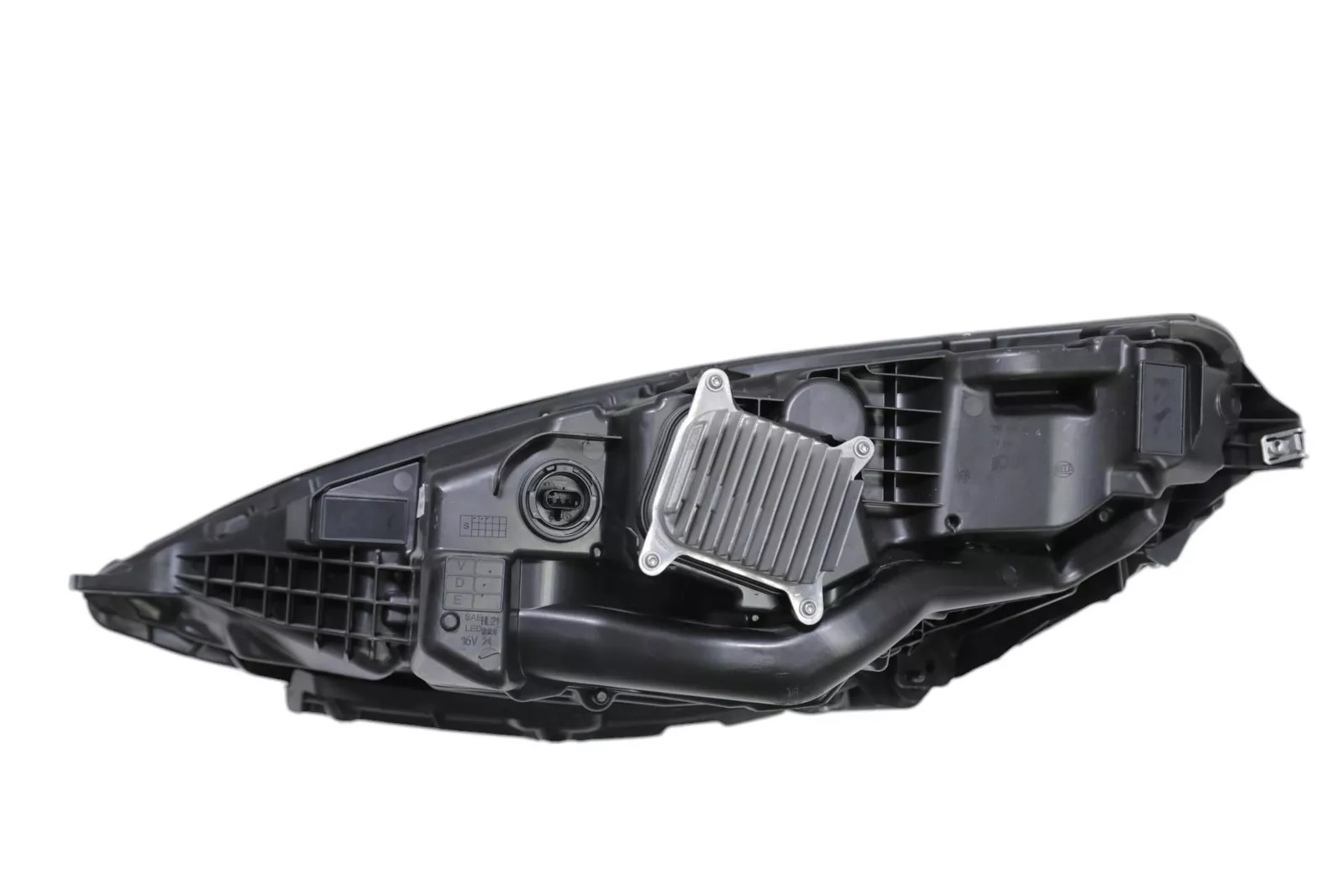 Model S unit from the back. The finned silver block is the LED driver.
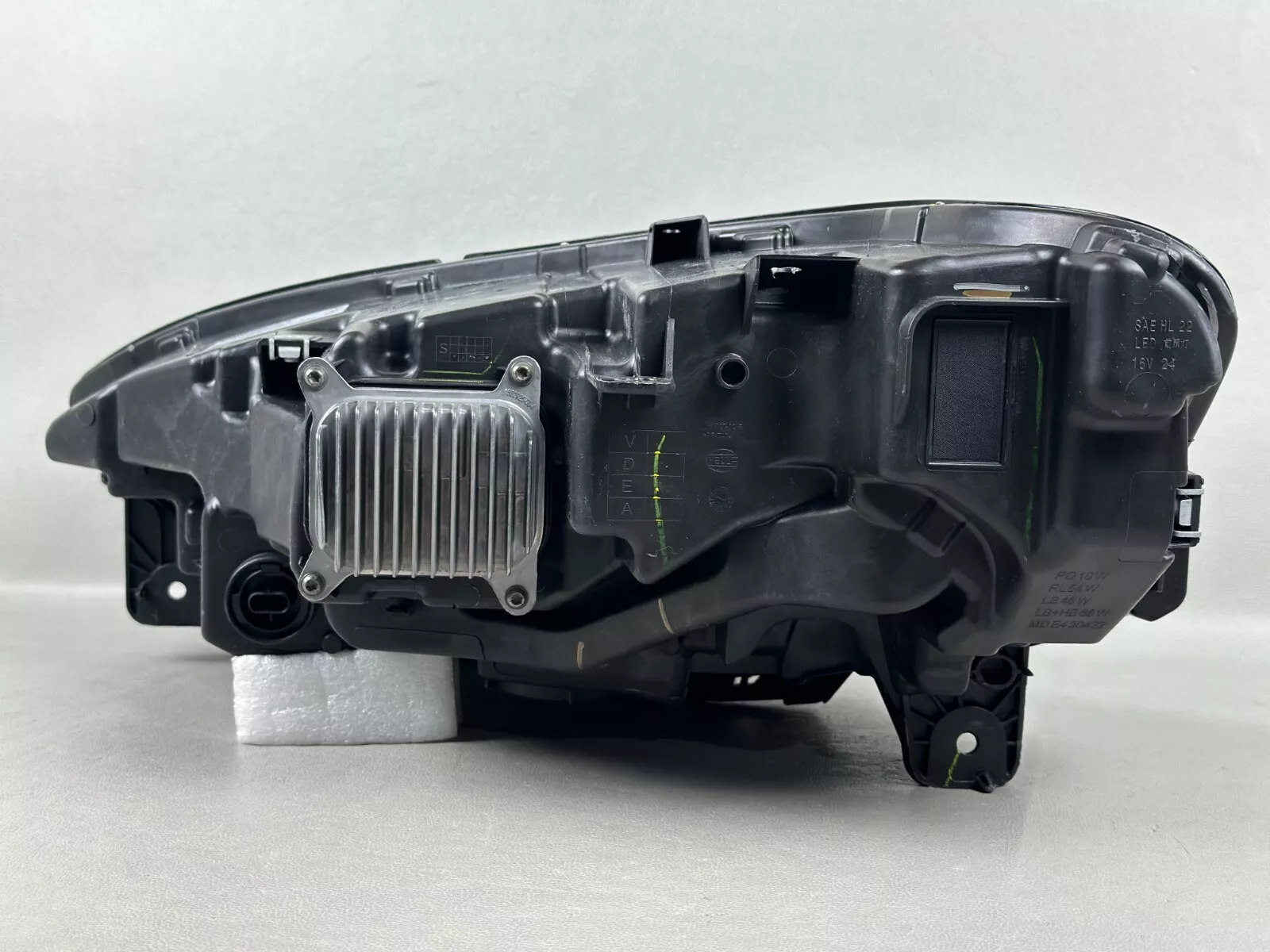 Model X housing. SAE HL 22, LED, 16V.
Nothing in the adapter does that conversion. The controller voltage is set by the MCU software. Change the config to Global lights and the car raises the voltage on that circuit and changes the LIN command version at the same time. Teslas run on feature flags for the hardware installed, and this is one of them.
The Palladium cars can do it because of the same parts mess that started this: they were designed to run both. The capability shipped with the car and nobody ticked the box.
Gen1 Model S and X can’t, and it’s two problems, not one. They’re 12v cars, and the Gen1 software branch has no Global light option in it at all. There’s no flag to flip because the code to drive these lights was never written into that branch. If you have a 2016 car, that’s the answer, and no adapter changes it.
The process
- Shut the car down.
- Pull the plastic cladding and the frunk tub.
- Unplug the old headlight connectors and plug the new lights in loose, sitting in the frunk.
- Power the car back up.
- Connect the diagnostic tool and launch Toolbox.
- Infotainment Dashboard, set Headlight Config to Global.
- Reinstall the software in service mode, or Canbus Redeploy from Toolbox.
- Confirm the config took and the lights actually function. Then shut the car down again.
- Swap the physical lights.
- Calibrate with the Global procedure in the service manual.
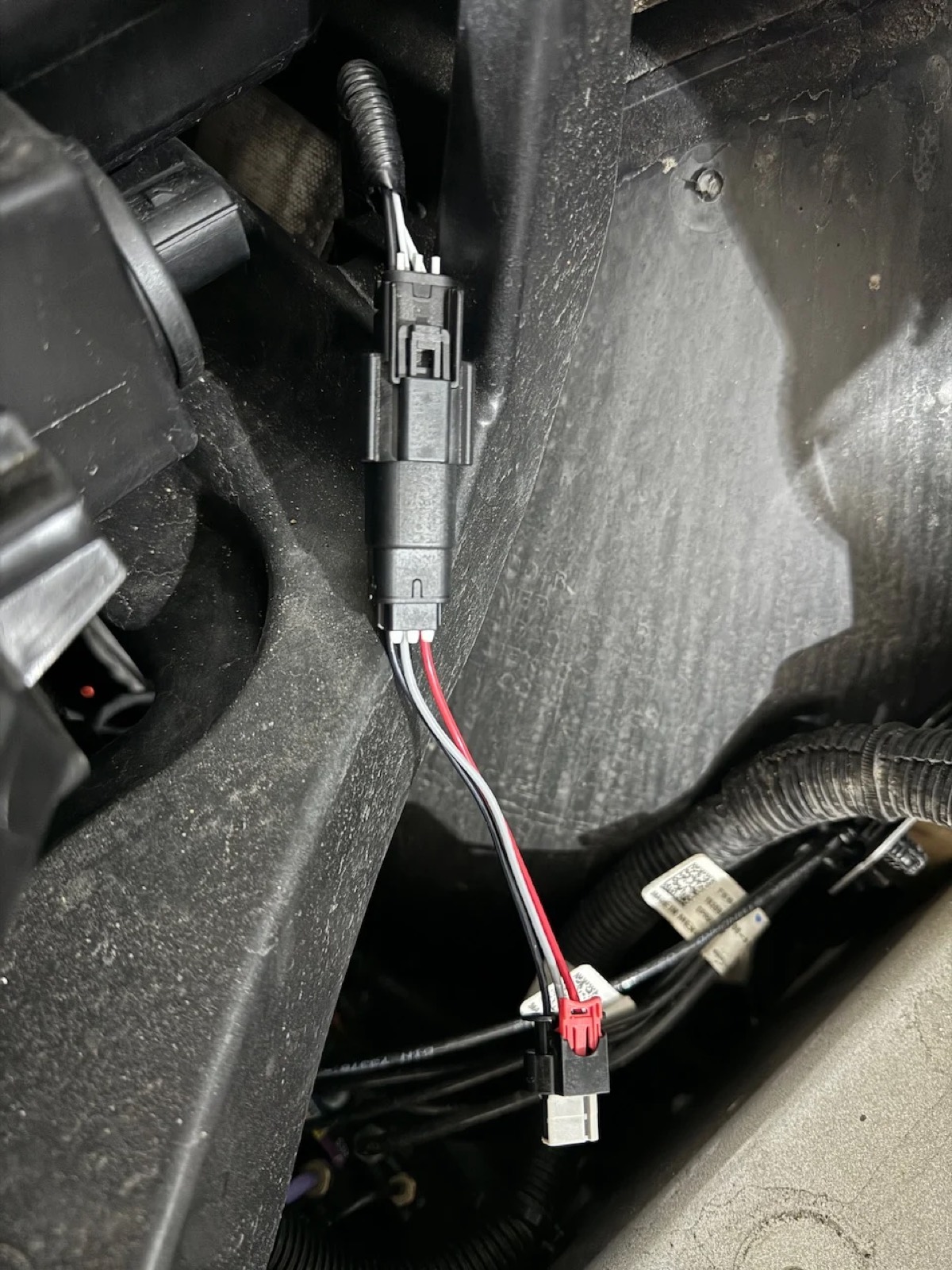 In the car. Nothing cut, nothing spliced, and it comes back out.
Steps 3 through 8 are the part people skip. You’re proving the config and the lights while everything is still loose in the frunk. Do it the other way around and you’re pulling the fascia off again to figure out whether it was the config or a connector that wasn’t seated. Ask me how I know. 🙂
The diagnostic access and the media converter side of this is a whole subject on its own, and it’s getting its own post.
What you give up
Adaptive is not an always-on feature and a bunch of people think theirs is broken. It needs Auto high beams on and the Adaptive box checked in the lights menu, and it only engages on very dark roadways. On a lit street you’ll never see it do anything.
The cornering lights are gone. Those are in the silver top section of the “Premium” headlight and that section isn’t functional on a Matrix light. An update was supposed to reproduce the behavior with the Matrix segments. It’s incredibly subtle. The best I can describe it is the hot spot of the beam shifting when you turn, and it’s nothing like the old spotter lights coming on. Plan on losing them.
2025 and newer cars don’t need any of this, they come with the lights. They also end the broader recontenting story. Those 2021-2024 controllers carry leftover wiring for front radar, USS, the premium headlights and more, and that’s not an exhaustive list. If even one of those wires got reused for another function the controllers aren’t compatible. Lots of unknowns still in there.
After
Done right, there’s nothing to see. No warning lights, no service message, better headlights than the car was sold with. That’s held for nearly everyone who’s done it, though I won’t claim it’s been universal. When it does go sideways it’s almost always the config not taking or a connector not fully seated, which is why step 8 is in the list.
The factory tow hitch post is the long version of a parts hunt, three years chasing a tow package Tesla says doesn’t exist. How I ended up making adapters at the kitchen table is over here.
Next up from the garage: the programming side, and the tools that make it possible.
Thanks for reading!