Build 2026 post-mortem: fog, first tokens, and a badge that says EXPERT
I’m writing this from the couch, properly wrecked, with a conference badge on the counter that says EXPERT in a reassuring shade of blue. (The badge printer doesn’t know about impostor syndrome. The badge printer simply believes.) Build 2026 is in the books, and since the whole week was equal parts teaching, booth duty, and staring at the Golden Gate Bridge between sessions, it deserves a proper post-mortem.
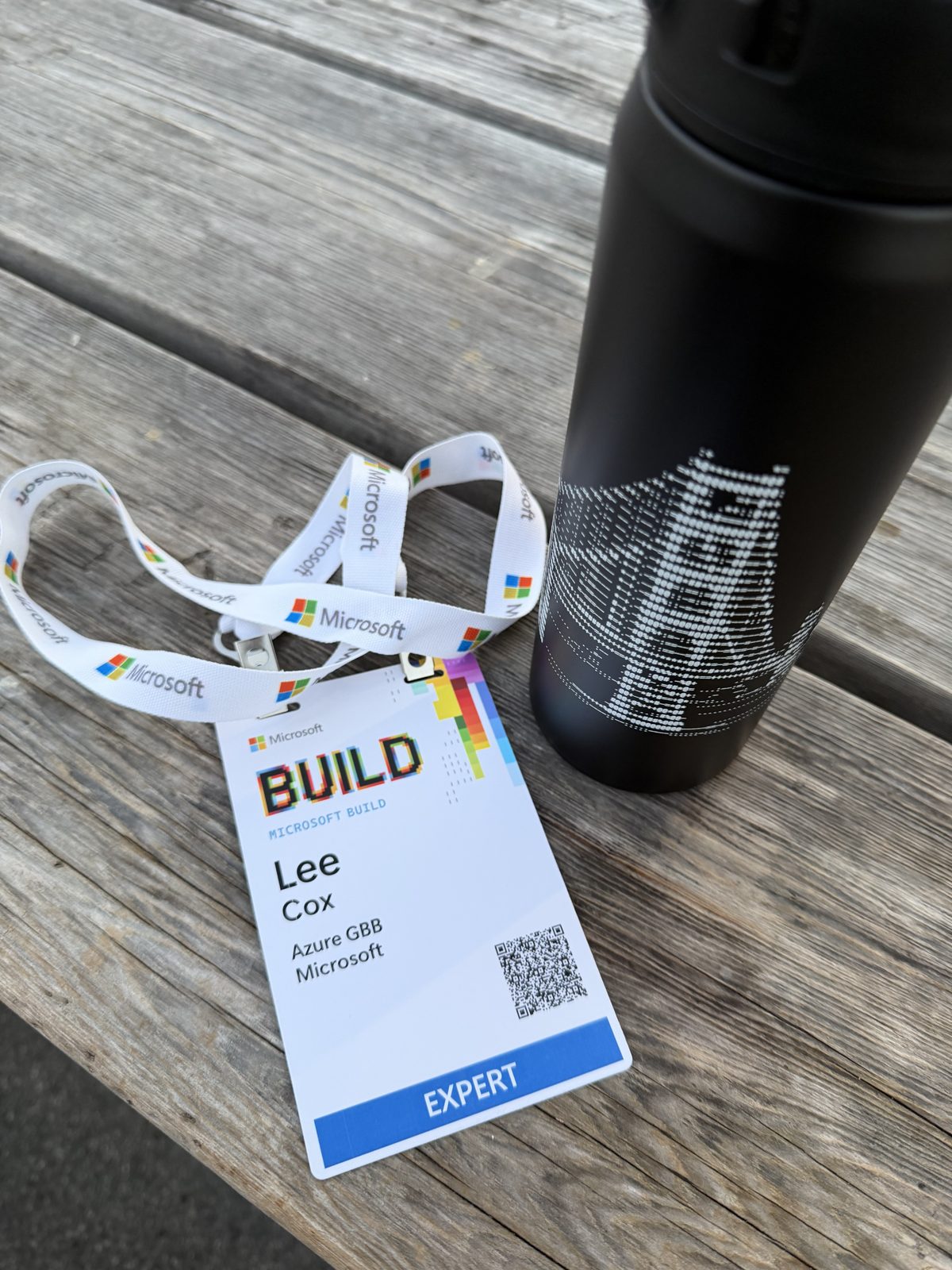
The badge believes in you. The bottle is elite swag: that's the Golden Gate in ASCII.
The venue: Fort Mason, which cheats
This year’s Build ran on the San Francisco waterfront, in the old pier buildings at Fort Mason. Is it fair to put a tech conference somewhere this pretty? No. It is not. Walk out of a session and the Golden Gate is RIGHT THERE, doing its postcard routine over the water. Alcatraz sat moodily in the fog behind the stacks of road cases like it had been art-directed. At one point a flotilla of kayakers paddled into the lagoon between the piers, flags up, just to watch the circus. Ten years of convention centers did not prepare me for a venue with seagulls and a view.
Lab 510: running a model ≠ production readiness
So, my main job for the week: proctoring Lab 510: taking LLMs from prototype to production on AKS. The session’s opening slide is the whole thesis, and I’d staple it to a bunch of conference-room whiteboards if facilities would let me: running a model is not production readiness. The lab walks through the five things that close that gap: repeatability, routing, observability, scaling, and a consumer-friendly endpoint. Then it makes attendees earn each one on a live cluster.
Proctoring is its own discipline. You’re not presenting; you spend the session walking rows of monitors, watching a room full of people hit a room full of different walls, and the walls are the curriculum. Watching where people actually get stuck in a hands-on AI lab is the best field research there is: almost nobody struggles with the model. They struggle with everything AROUND the model: the plumbing, the endpoints, the “why can’t the cluster see my deployment” moments. Which is to say: the production part. The slide is right, and the room proved it all session, every session.
Booth duty: explaining Azure Linux until my voice gave out
Between lab sessions I worked the showroom floor at the Azure Linux booth with my teammate Carlos, who is both excellent company and the kind of colleague who can hold three technical conversations while pointing a fourth person toward coffee. Booth duty at Build is speed chess: forty-five seconds to figure out if the person in front of you wants the elevator answer (“it’s Microsoft’s own Linux distribution. It runs under more of Azure than you’d guess”) or the real conversation, which at this show was AKS node pools, edge deployments, and where Azure Linux actually sits underneath the services people already use.
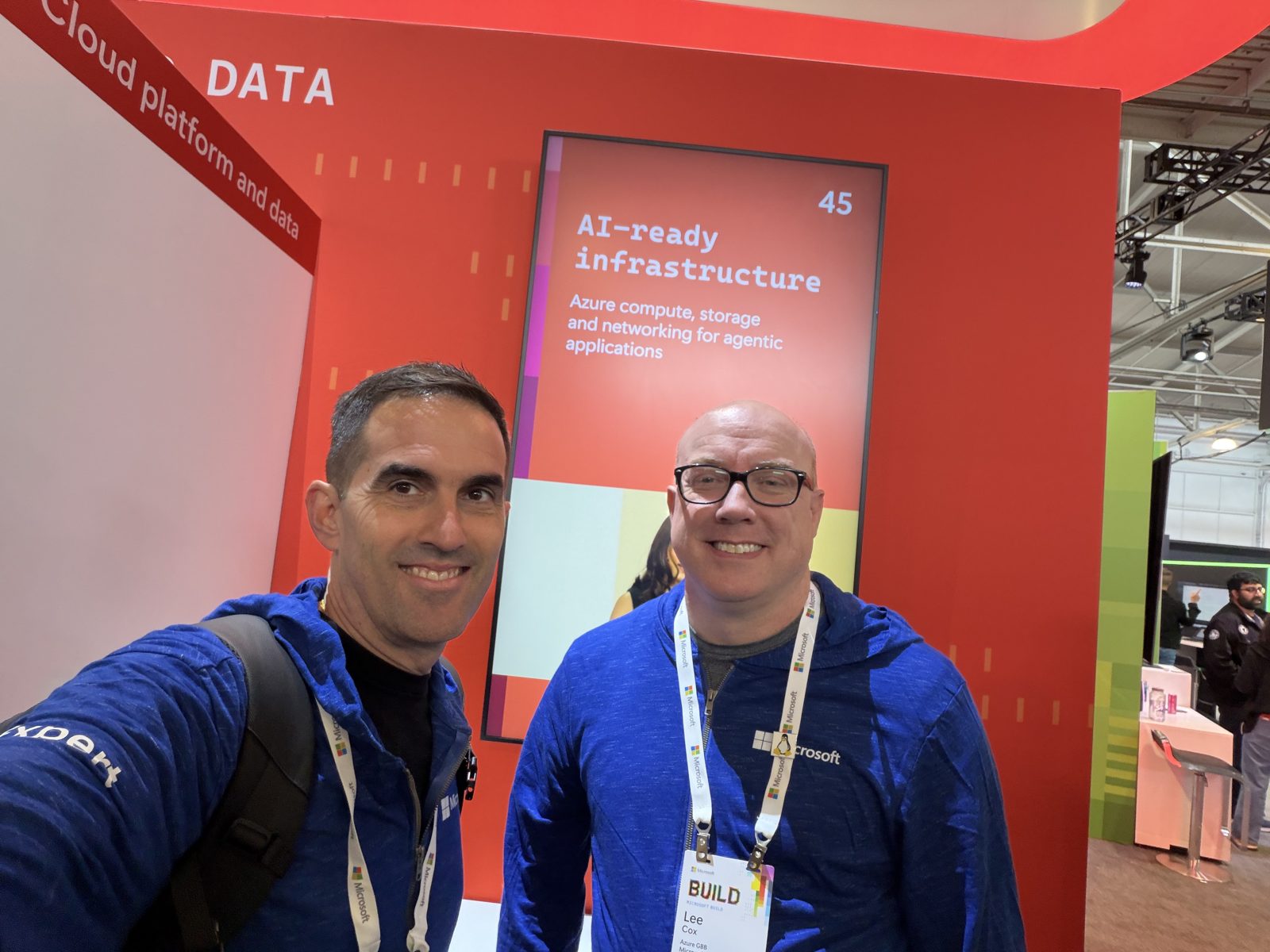
Booth crew at the Azure Linux station. Note the Tux pin on the lanyard; the penguin worked the booth too!
The Satya-and-Jensen show
Keynote highlight, no contest: Satya Nadella in person, with Jensen Huang beaming in ten feet tall on the side screens, for the announcement of the RTX Spark line. I’ve watched a decade of these keynotes from home; being in the room when the NVIDIA and Microsoft logos came up side by side hits different!
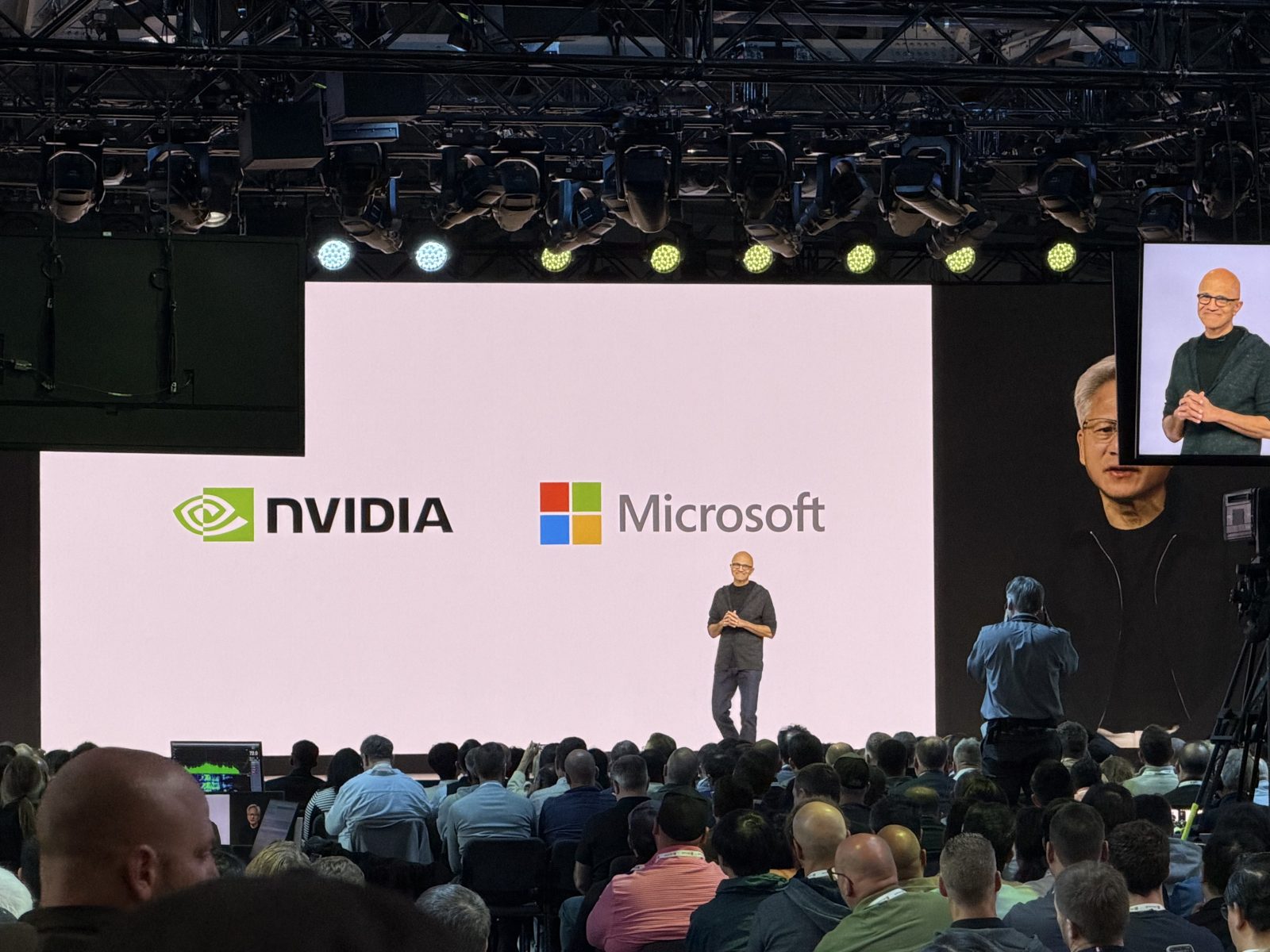
Satya on stage, Jensen ten feet tall on the side screens, and two logos that spend a lot of time together in my rack.
Yeah, whatever else you want to say about this industry’s current moment, the two companies whose stacks I spend my days (and, who am I kidding, my nights) wiring together were on one stage pointing the same direction. I’ll have more to say about the small-end-of-the-GPU-market implications once I’ve digested the announcements properly (the edge-inference corner of my brain was taking notes the whole time).
The city, all of it
So, two more San Francisco notes, because a post-mortem should be honest about the whole week and not just the badge-scanned parts.
The protesters were part of the week too. On the hill above the venue, demonstrators hung banners about AI datacenters and the company’s business, and you could see them from the piers all week. I’m not going to pretend they weren’t there, and I’m not going to pretend a conference about deploying AI at scale has nothing to do with the questions being raised. You can believe in the work and still believe the hard questions deserve to ride along. They walked with me to the lab more than once.
And the Waymos. First ride of my life early in the week; by Friday I’d stopped counting. I’m the guy who reprograms his own cars, so understand the gravity of this sentence: I got into a car with no driver, no steering input from me, and no gateway config I was allowed to touch, and within four minutes it was the most normal thing in the world. The lane discipline is genuinely better than half of Nashville. I have a hundred car-guy questions about the sensor stack, but honestly I spent most of the rides just looking out the window at the hills. I want to go back!
The take-homes
A water bottle with the Golden Gate rendered in ASCII (elite swag, whoever approved that gets a raise!), a voice that needed two days of rest, a phone full of pier photos, and the same conviction I brought home from the lab room: the models are the easy part now. The production engineering (the repeatability, the routing, the observability, all the “boring” plumbing) is where the actual work lives, at every scale from my SE350 to the clusters those keynote slides were built on.
It was a great week with a great team in a frankly ridiculous venue, and I’ll have more soon from the rack.
Thanks for reading!